Does Parmesan Cheese Melt?
Parmesan melts, but late: it stays solid until about 180°F and never turns stringy. How to melt it into a smooth sauce, and why it clumps.
Yes, Parmesan melts, but late and without stretching. Soft cheeses melt at about 130°F, while Parmesan stays solid until about 180°F, because it is a hard, low-moisture cheese. On its own it softens and browns. In a sauce it melts smoothly when it is grated fine and stirred into warm liquid off the heat, with starch or fat around it. Boiled, it clumps.
Why Parmesan melts so late
Cheese melts when heat breaks down the protein structure that holds it together. Wikipedia's article on cheese gives the temperatures: soft, high-moisture cheeses melt at around 55°C (131°F), and hard, low-moisture cheeses such as Parmesan remain solid until they reach about 82°C (180°F).
Parmesan is at the dry end of that range. Parmigiano Reggiano is aged at least 12 months, and the United States standard for Parmesan, according to the same article, allows no more than 32 percent water.
| Melts at about | When melted | |
|---|---|---|
| Soft, high-moisture cheese, such as mozzarella | 130°F (55°C) | Flows and stretches |
| Hard, low-moisture cheese, such as Parmesan | 180°F (82°C) | Softens, then browns; does not stretch |
Why it clumps in a sauce
The same Wikipedia article notes that many cheeses, when melted, turn stringy or let their fat separate, and that they can be coaxed into melting smoothly in the presence of acid or starch. That is the whole problem with Parmesan in a pan, and the whole solution.
Dropped into a boiling liquid, the grated cheese is heated past its melting point at once. It seizes into lumps and its fat separates, which is the failure the article describes. In a liquid that is hot but not boiling, with starch in it, the cheese melts into the sauce and stays there.
How to melt Parmesan smoothly
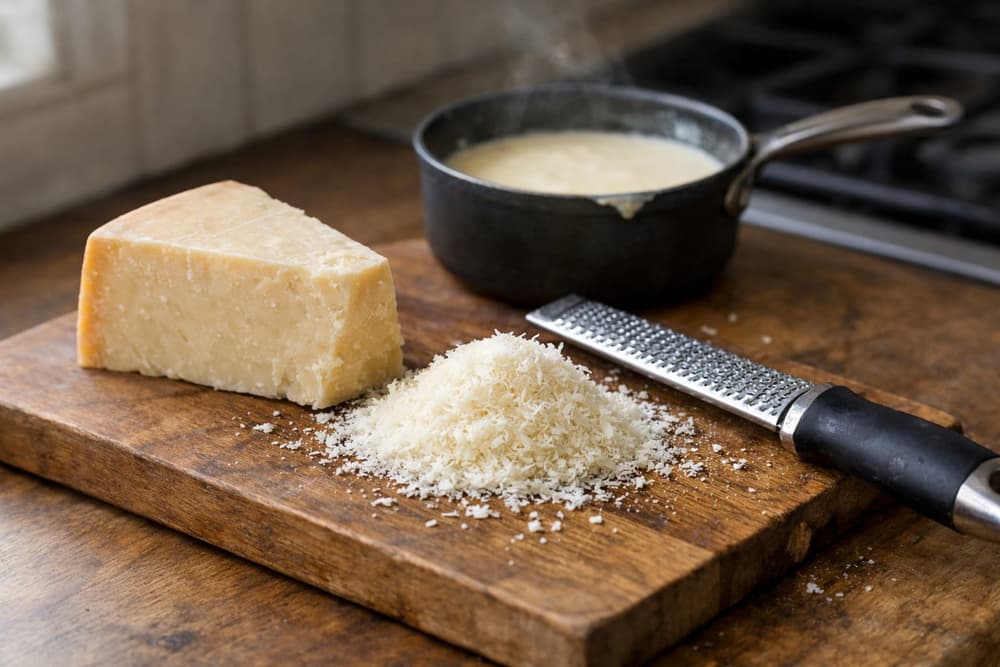
- Grate it fine. A rasp grater gives shreds that melt in seconds. Coarse shreds and chunks melt on the outside and clump before the middle is warm.
- Take the pan off the heat. Let a sauce stop bubbling before the cheese goes in. The heat left in the pan is enough.
- Add it in handfuls, stirring each one in before the next.
- Give it starch or fat. Pasta water, a flour-thickened sauce or cream holds the melted cheese in suspension.
- Do not boil it again. A sauce with Parmesan in it is rewarmed gently.
The cacio e pepe on this site is this method with pecorino: cheese stirred into starchy pasta water off the heat.
Grated from the wedge, or from the can
Pre-grated Parmesan may contain cellulose, which United States rules allow at up to 4 percent as an anticaking agent, as the Parmesan article records. It keeps the shreds apart in the can, and it does the same in a sauce, where the cheese is meant to come together. For melting, grate a wedge.
Wikipedia also notes that some American Parmesan sold already grated has been aged for less than 12 months. A younger cheese is moister and melts sooner, but the label rarely says how old it is.
On top of a dish, and as a crisp
Sprinkled on a pizza, a gratin or baked pasta, Parmesan does not form a melted layer the way mozzarella does. It softens, then dries and browns. For a melted layer, pair it with a cheese that flows.
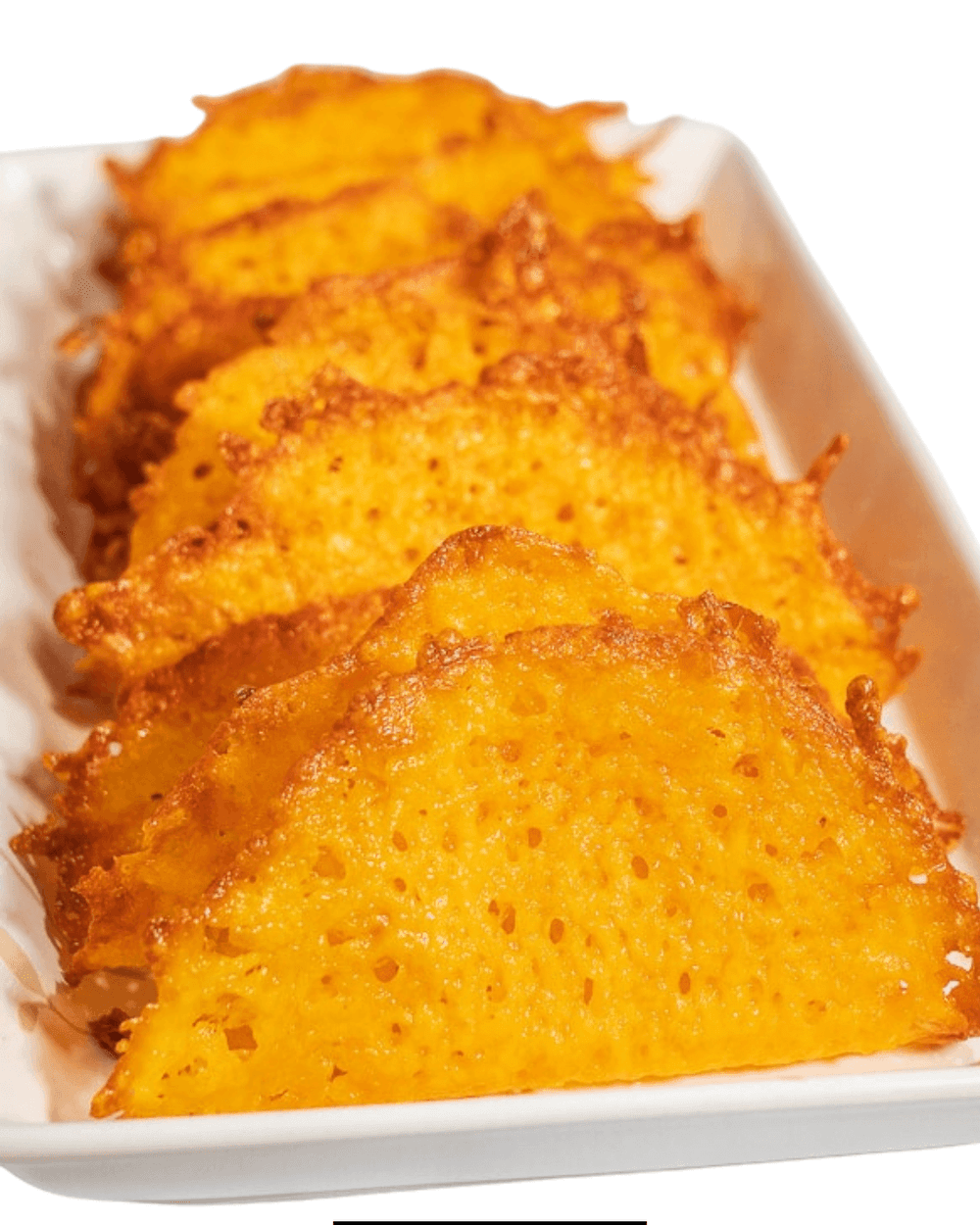
Heated by itself, it turns into a crisp. Spoon tablespoons of finely grated Parmesan onto a parchment-lined baking sheet, flatten them and bake at 400°F for 5 to 7 minutes, until golden. The mounds melt, spread and harden into lacy wafers as they cool.
A sauce that cannot break
Processed cheese melts smoothly for a reason: it is cheese mixed with an emulsifying agent, and it was invented in 1911 by adding sodium citrate to melted Emmentaler, as Wikipedia tells it. The same salt, sold for cooking, makes a Parmesan sauce that holds: 1/2 teaspoon dissolved in 1/2 cup of hot water takes 4 ounces of finely grated cheese.
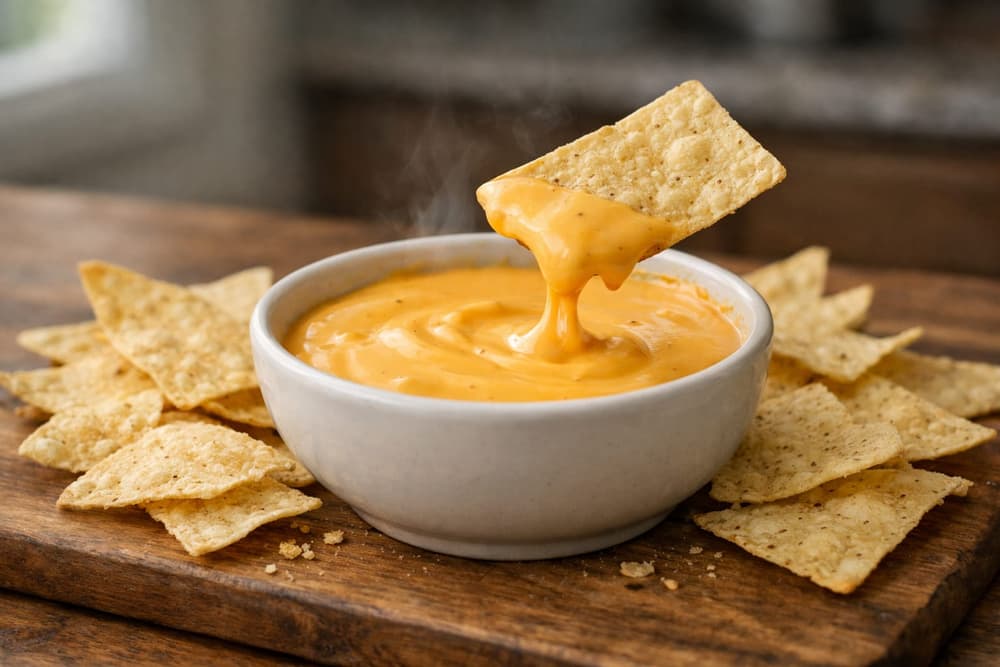
A cheese sauce of that kind, made with other cheeses, is the Ricos nacho cheese sauce copy on this site.
En español: sí, el queso parmesano se derrite, pero tarde. Sigue sólido hasta unos 82 °C y no forma hilos. Para fundirlo en una salsa, rállelo fino y añádalo fuera del fuego a un líquido caliente con almidón o nata; si hierve, se forma un grumo.
Dishes with Parmesan on this site
The Olive Garden Tour of Italy copy has a fettuccine Alfredo, the classic case of Parmesan melted into a sauce, and the lasagna al forno uses grated Parmesan between its layers.