Trader Joe's Cacio e Pepe Recipe
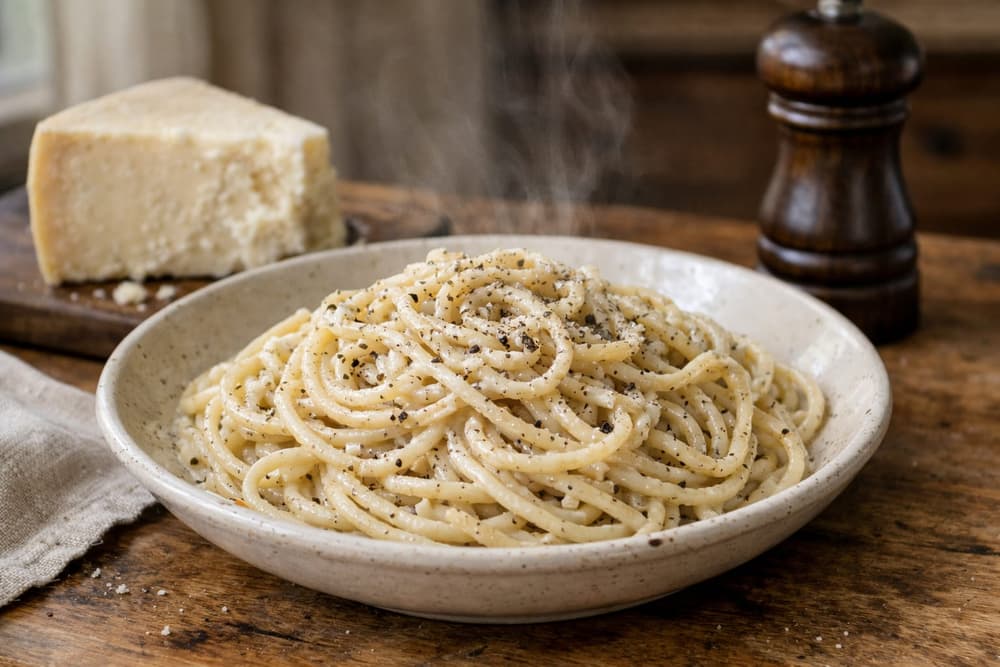
Cacio e pepe as in Trader Joe's jarred sauce: Pecorino Romano and black pepper, made from scratch with pasta water. Four servings in 20 minutes.
- Total
- 20 min
- Serves
- 4
- Calories (est.)
- 485
Trader Joe's Cacio e Pepe sauce is Pecorino Romano cheese and black pepper in a jar; the dish it comes from needs only those two, pasta and the water it cooked in. For four, cook twelve ounces of spaghetti, toast two teaspoons of cracked pepper, and toss the pasta off the heat with six ounces of finely grated pecorino stirred to a paste.
What Trader Joe's Cacio e Pepe sauce is
Trader Joe's sells a Cacio e Pepe Pasta Sauce in a 14.5-ounce jar, $3.99 on 1 October 2026. Its product page says the sauce is made by an Italian supplier and combines Pecorino Romano, a sheep's milk cheese, with black pepper, and it suggests long pasta such as spaghetti or linguine.
Cacio e pepe means cheese and pepper. The dish comes from Lazio, the region around Rome, and is made with grated pecorino romano and black pepper on tonnarelli or spaghetti. Wikipedia adds the warning that matters in the kitchen: the cheese turns lumpy easily. The recipe below is the dish made from scratch, not Trader Joe's formula, and MakeFoodLovely is not connected with Trader Joe's.
Recipe
Cacio e Pepe
Spaghetti with a sauce of finely grated Pecorino Romano, toasted cracked black pepper and starchy pasta water, the dish that Trader Joe's Cacio e Pepe sauce is based on. Four servings.
- Prep
- 5 min
- Cook
- 15 min
- Total
- 20 min
- Serves
- 4
- Cuisine
- Italian
Ingredients
- 12 ounces spaghetti
- 6 ounces Pecorino Romano cheese, finely grated
- 2 teaspoons black peppercorns, coarsely cracked
- 1 tablespoon salt
Instructions
- Bring 3 quarts of water to a boil in a wide pot and add the salt. Cook the spaghetti until 1 minute short of the time on the package.
- While the pasta cooks, toast the cracked pepper in a large dry skillet over medium heat for 1 minute, until fragrant. Add 1 cup of the pasta water to the skillet and let it simmer.
- Put the grated pecorino in a bowl and stir in 1/4 cup of lukewarm water, a little at a time, until it forms a thick, smooth paste.
- Lift the spaghetti into the skillet with tongs and toss it in the pepper water for 1 minute, until most of the water has been absorbed. Take the skillet off the heat and wait 1 minute.
- Add the cheese paste and toss hard, adding pasta water a splash at a time, until the sauce is creamy and coats the pasta. Serve at once.
Nutrition
- Calories:
- 485
Calculated from the ingredient quantities above using the USDA FoodData Central database, then divided by the number of servings. It is an estimate and will vary with the exact products you use.
Why the cheese goes in off the heat
Pecorino dropped into a boiling pan seizes: the protein tightens into rubbery strings and the fat runs out. Two steps prevent it. The skillet comes off the burner for a minute before the cheese goes in, and the cheese arrives as a paste, already loosened with lukewarm water, so that it melts evenly.
The same rule holds for the Alfredo in the Olive Garden Tour of Italy, and the reasons are set out in does Parmesan cheese melt.
Pasta water is the sauce
- Less water than usual. Three quarts for 12 ounces of pasta leaves the water cloudy with starch, and the starch is what holds cheese and water together.
- One tablespoon of salt, no more. Pecorino Romano is a salty cheese.
- Keep a cup aside before the pasta leaves the pot. The sauce tightens within a minute on the plate, and a splash loosens it.
Pecorino, Parmesan and the pepper
Pecorino Romano is made from sheep's milk and is the cheese the dish is named for. Parmesan gives a milder plate that is no longer cacio e pepe in the strict sense. Grate the cheese on the finest holes; shreds from a coarse grater do not melt into a paste.
Crack whole peppercorns under a heavy pan or in a mortar. Ready-ground pepper has lost most of its aroma, and in a dish of three ingredients there is nothing to hide that.
Using the jar
To use the jarred sauce, warm it gently in a wide pan with 1/4 cup of pasta water, add 12 ounces of cooked spaghetti and toss. Finish it with freshly cracked pepper.
For a tomato-based weeknight pasta on this site, see the spaghetti with meat sauce.
Did you make this?
Let others know how it turned out.