Plum Cake Recipe
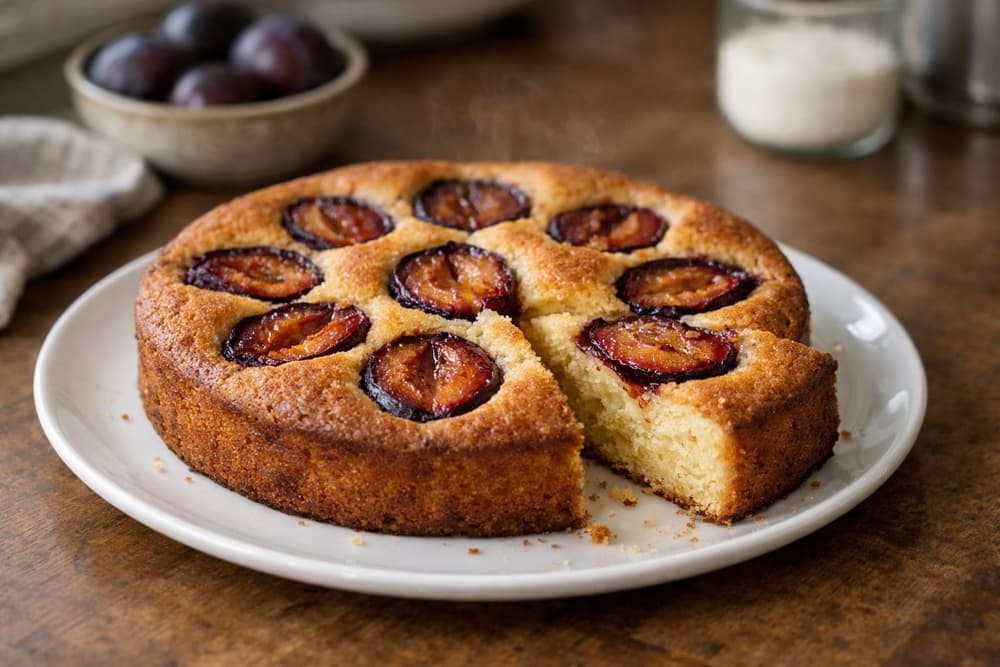
A plain butter cake with halved Italian prune plums pressed into the top and cinnamon sugar over them. One bowl, a 9-inch pan, 50 minutes in the oven.
- Total
- 1 hr 10 min
- Serves
- 8
- Calories (est.)
- 280
Plum cake is a plain butter batter — flour, sugar, two eggs — spread in a 9-inch pan with halved Italian prune plums pressed in cut side up, then baked at 350°F for 50 minutes under a dusting of cinnamon sugar. The plums sink as the batter rises around them, and their juice runs into the crumb; the sugar on top keeps the cut faces glossy instead of dry.
Where this plum cake comes from
This is the shape of the plum torte Marian Burros published in The New York Times on 21 September 1983, which the paper then reprinted every plum season until 1995, when the food editor told readers they were being cut off and should keep their clipping.
The proportions here are the classic ones: one cup of flour, three-quarters of a cup of sugar, a stick of butter, two eggs, and as many plum halves as will fit. There is no separating of eggs and no folding — everything goes into one bowl with a hand mixer.
Recipe
Plum Cake
A one-bowl butter cake with halved Italian prune plums pressed into the top and baked under cinnamon sugar — a 9-inch cake in an hour.
- Prep
- 20 min
- Cook
- 50 min
- Total
- 1 hr 10 min
- Serves
- 8
- Cuisine
- American
Ingredients
- 1 cup all-purpose flour
- 1 teaspoon baking powder
- 1/4 teaspoon salt
- 1/2 cup unsalted butter, softened
- 3/4 cup granulated sugar
- 2 large eggs
- 1 teaspoon vanilla extract
- 12 Italian prune plums (about 1 pound), halved and pitted
- 1 tablespoon granulated sugar, for the top
- 1 teaspoon ground cinnamon
- 1 teaspoon lemon juice
Instructions
- Heat the oven to 350°F. Butter a 9-inch springform or round cake pan and line the base with parchment.
- Whisk the flour, baking powder and salt together in a small bowl.
- Beat the softened butter and 3/4 cup sugar in a large bowl until pale and fluffy, about 3 minutes with a hand mixer. Beat in the eggs one at a time, then the vanilla.
- Stir the flour mixture in until no dry streaks remain. The batter will be thick, closer to a drop-cookie dough than a pourable cake batter, and that is correct.
- Spread the batter evenly in the pan. Press the plum halves into it cut side up, close together, starting at the edge and working in.
- Sprinkle the lemon juice over the plums, then the tablespoon of sugar mixed with the cinnamon.
- Bake for 45 to 55 minutes, until the top is golden, the plums are bubbling at the edges and a skewer pushed into the cake between two plums comes out clean. Cool in the pan for 20 minutes before releasing.
Nutrition
- Calories:
- 280
Calculated from the ingredient quantities above using the USDA FoodData Central database, then divided by the number of servings. It is an estimate and will vary with the exact products you use.
The plums
Italian prune plums are the ones to use: small, oval, deep purple with a dusty bloom, and freestone, so the pit lifts out of a halved plum with a fingertip. They are firm and not very juicy, which is exactly what a cake wants — they hold their shape and do not flood the batter. Their season is short, roughly late August through October, which is why this cake is a September habit.
If they are not available, any firm plum works cut into quarters instead of halves. Round, juicy plums — the big red or black ones — release too much liquid and leave a soggy ring around each piece; if they are all there is, cut them thinner and use fewer. Apricot halves, cut side up, are the other classic substitute.
Why the fruit sinks, and why that is fine
The cake has one trick, and it is the batter's stiffness. A pourable batter lets the fruit sink to the bottom and bake into a wet layer under the cake. This batter is thick enough to hold a spoon upright, so the plum halves sit where they are pressed and the cake rises up around them. By the end they are half-submerged, cut faces up, with a pool of dark juice in each one.
Fruit in a cake sinks when the batter is thinner than the fruit is heavy. Here the fruit is meant to sink — partly. Because the batter is stiff, the plum halves settle only as far as the rising cake lets them, and the crumb sets around them before they reach the bottom. The result is a top that is more plum than cake, with the fruit's juice soaked into the two inches of crumb beneath it.
Three things break that balance. Too much flour makes the cake bake up around the plums and leave them stranded on top, dry; too little, or melted instead of softened butter, thins the batter and drops them to the base; and overripe plums collapse into jam. A batter that mounds on a spoon and plums that are firm to the thumb are the two checks that matter.
Serving and keeping
The cake can be served warm or at room temperature. Keep it covered at room temperature for up to three days; the top stays moist and the crumb tightens a little. It also freezes well, whole, for up to three months — bake two in plum season and one of them is a February dessert.
Serve it plain, or with a scoop of Gold Medal Ribbon ice cream and a thread of caramel sauce.
If a one-bowl cake is the appeal, the cheesecake dump cake is the other one on this site that needs no mixer at all, and the soda cake manages with two ingredients.
Did you make this?
Let others know how it turned out.